FREE SHIPPING ON ORDERS $75+ IN THE U.S.

Pregnancy Symptoms: Early Signs and Week-by-Week Guide
Pregnancy symptoms can begin earlier than many people expect, but they do not look the same for everyone. Some women notice subtle changes before a missed period, while others do not experience clear symptoms until later.
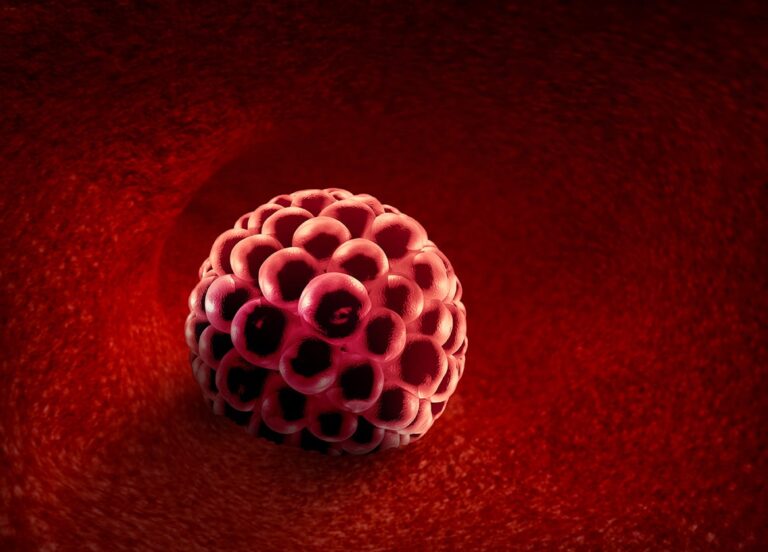
What matters most is timing. Many early pregnancy symptoms begin after implantation, when a fertilized egg attaches to the uterine lining and hormone levels start to rise.
When Do Early Pregnancy Symptoms Start?
Early pregnancy symptoms would begin after implantation, which typically happens about 6 to 12 days after ovulation. Before implantation, your body has not started producing enough pregnancy hormones to cause true pregnancy symptoms.
This is why the earliest part of pregnancy can feel confusing. You may be tracking your cycle closely, but symptoms usually do not start until after the fertilized egg has implanted.
What Are the First Signs of Pregnancy?
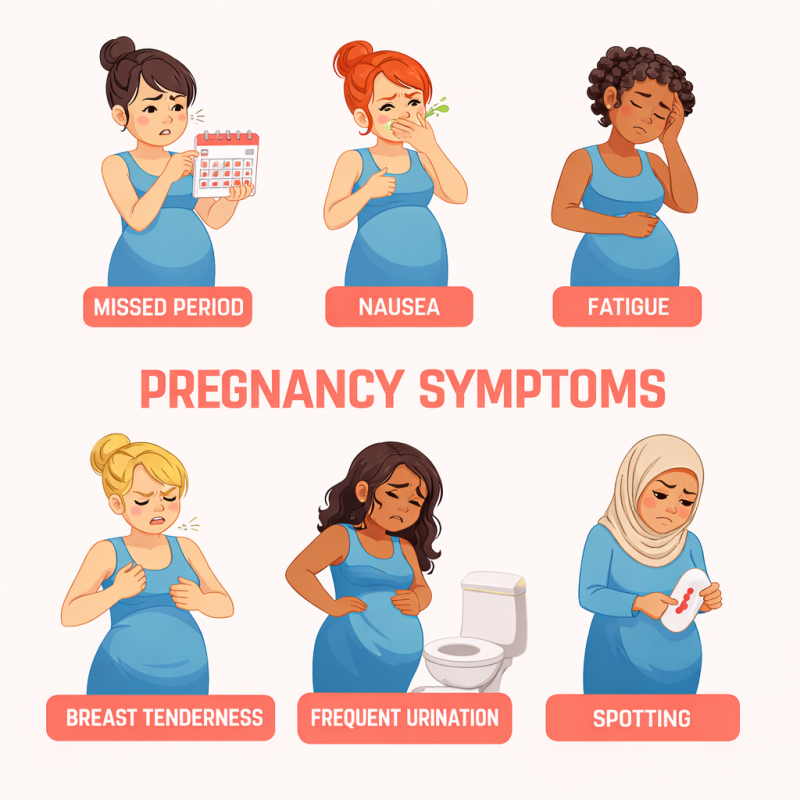
The first signs of pregnancy often include a missed period, fatigue, breast tenderness, nausea, and light spotting from implantation. Most women report at least one early symptom, though the type and intensity can vary from person to person.
- Missed period
- Nausea or morning sickness
- Fatigue
- Breast tenderness
- Frequent urination
- Light spotting (implantation bleeding)
Some early symptoms are linked to rising progesterone levels, while others are connected to hCG, the hormone your body begins producing after implantation.
Early Pregnancy Symptoms
Many early pregnancy symptoms overlap with PMS, which is one reason they can be easy to miss. The difference is that early pregnancy symptoms are caused by hormonal changes that continue after implantation.
Missed Period
So at 2 weeks pregnant, you are not technically pregnant yet. Your body is still preparing for ovulation, which is why most women do not experience pregnancy symptoms at this stage.
A missed period is often the most recognizable early sign of pregnancy. For women with regular cycles, it is usually the first clear sign that something has changed.
Nausea
Nausea can begin as early as week 4 to 6. It is commonly linked to rising hCG levels and can happen at any time of day, not just in the morning.
Many women report nausea as one of the most noticeable early symptoms, though some never experience it.
Fatigue
Fatigue is one of the earliest pregnancy symptoms for many women. Rising progesterone can make you feel unusually tired, even before a missed period.
Most women report feeling more tired than usual in early pregnancy, especially as hormone levels increase.
Breast Tenderness
Breasts may feel sore, swollen, heavy, or more sensitive than usual. Hormonal changes increase blood flow and affect breast tissue early in pregnancy.
This symptom can feel similar to PMS, but many women report that pregnancy-related breast tenderness feels more intense or lasts longer.
Frequent Urination
Frequent urination can begin early in pregnancy as hormone changes increase blood flow to the kidneys and body fluid levels begin to shift.
Many women notice they are using the bathroom more often than usual, even in the early weeks.
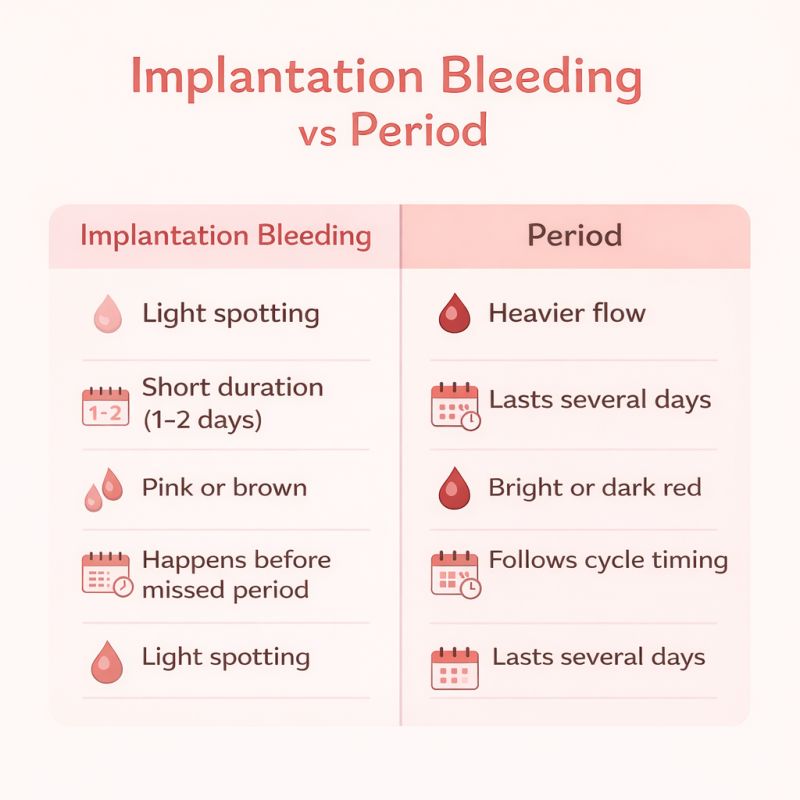
Implantation Bleeding
Light spotting can occur when the fertilized egg attaches to the uterine lining. This usually happens about 6 to 12 days after ovulation, often before a missed period.
Implantation may also cause mild cramping because the embryo is embedding into the uterine lining. Many women notice nothing at all, which is also normal.
Pregnancy Symptoms by Week
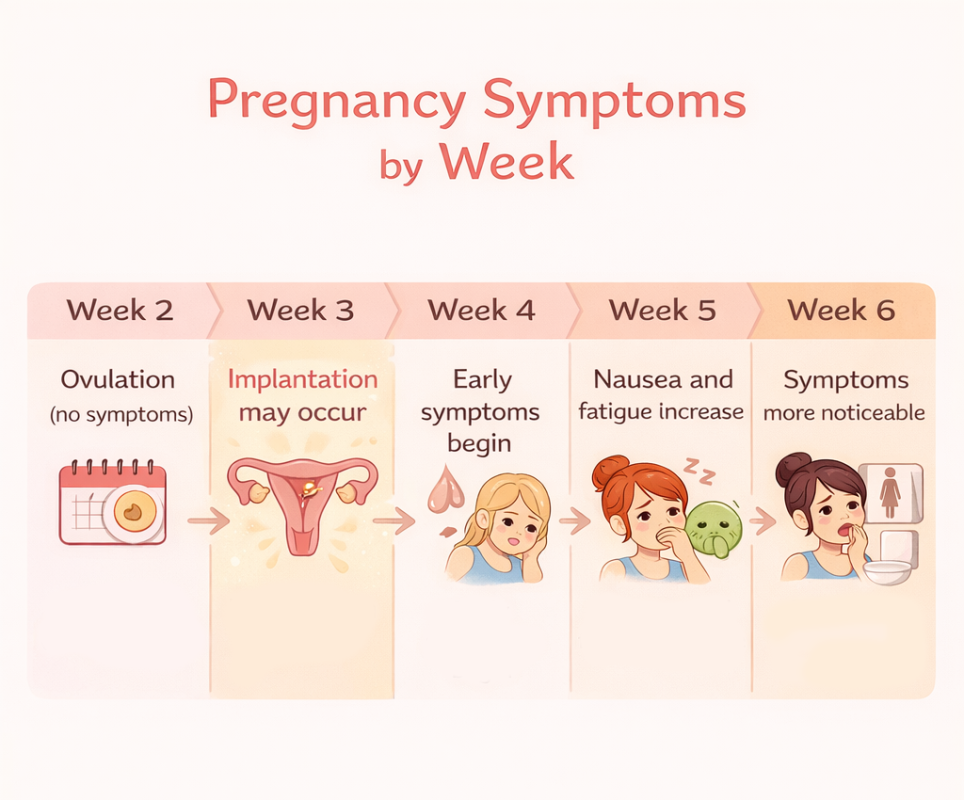
Pregnancy symptoms often follow a general pattern based on when ovulation, fertilization, and implantation happen. While every experience is different, understanding the timeline can make early symptoms easier to interpret.
Why Week 2 of Pregnancy Means You Are Not Pregnant Yet
Pregnancy is measured from the first day of your last menstrual period (LMP), not from the day of conception. That means the first two weeks of pregnancy are counted before fertilization has even happened.
- Week 1 = your period
- Week 2 = ovulation is approaching
- Week 3 = fertilization may occur and implantation may begin
This happens because hormone levels remain elevated after implantation, which prevents the uterine lining from shedding as it normally would during a period.
Pregnancy Symptoms at 2 Weeks
At 2 weeks, ovulation is usually approaching or just occurring. You are not technically pregnant yet, so true pregnancy symptoms are not expected.
Pregnancy Symptoms at 3 Weeks
At 3 weeks, fertilization may have occurred and implantation may begin. Some women report light spotting or mild cramping, while many notice nothing at all.
If you are unsure when implantation may have happened, using a calculator can help estimate your timeline.
Use our implantation calculator to estimate your timing.
Pregnancy Symptoms at 4 Weeks
At 4 weeks, early symptoms may begin to appear. Fatigue, breast tenderness, and a missed period are common, and some women may also begin to feel mild nausea.
Pregnancy Symptoms at 5 Weeks
At 5 weeks, symptoms often become more noticeable. Nausea, fatigue, and frequent urination are commonly reported as hormone levels continue to rise.
Pregnancy Symptoms at 6 Weeks
At 6 weeks, symptoms like nausea and fatigue may feel stronger. Many women clearly recognize that something has changed by this stage.
Pregnancy Symptoms But Negative Test
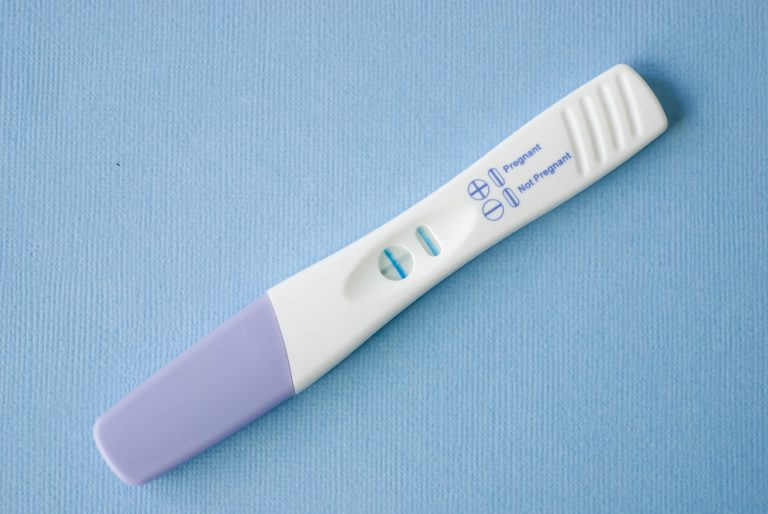
It is possible to experience pregnancy symptoms but still get a negative test result. This often happens when testing too early, before hCG levels are high enough to detect.
Because symptoms begin after implantation, timing matters. If implantation happened later than expected, hormone levels may not yet be high enough for a positive result.
Waiting a few days and testing again often gives a more accurate result.
Pregnancy Symptoms vs PMS
Many early pregnancy symptoms overlap with PMS, which can make it difficult to tell the difference. The biggest clues usually come from timing, intensity, and progression.
| Symptom | Pregnancy | PMS |
|---|---|---|
| Timing | After implantation, usually around the time of a missed period | Before your period starts |
| Missed period | Common and often the first clear sign | Rare |
| Nausea | Common in early pregnancy | Uncommon |
| Fatigue | Often stronger and more persistent | Milder and often improves once your period starts |
| Breast tenderness | May feel more intense or last longer | Common but usually goes away with your period |
| Cramping | Mild and sometimes linked to implantation | Often more noticeable before a period |
| Spotting | Possible as light implantation bleeding | Less common before full flow begins |
| Symptom pattern | Symptoms may continue or gradually increase | Symptoms usually peak, then fade once bleeding starts |
Symptoms That Are Not Reliable Signs of Pregnancy
Not every symptom is a reliable sign of pregnancy. Many commonly searched symptoms can also happen because of PMS or normal hormonal changes during your cycle.
This is why symptoms alone cannot confirm pregnancy. A pregnancy test is the most reliable way to know.
- Bloating — often caused by progesterone before a period
- Cramping — can happen with both PMS and early pregnancy
- Mood swings — common with hormone fluctuations of any kind
- Food cravings or aversions — not a reliable early sign on their own
- Headaches — can happen during PMS or early pregnancy
- Back pain — more often linked to PMS than early pregnancy
Many women report simply feeling “different” early on, but those sensations are not specific enough to confirm pregnancy without testing.
When Should You Take a Pregnancy Test?
Symptoms alone cannot confirm pregnancy. The most reliable way to know is with a pregnancy test taken at the right time.
- Test after a missed period for best accuracy
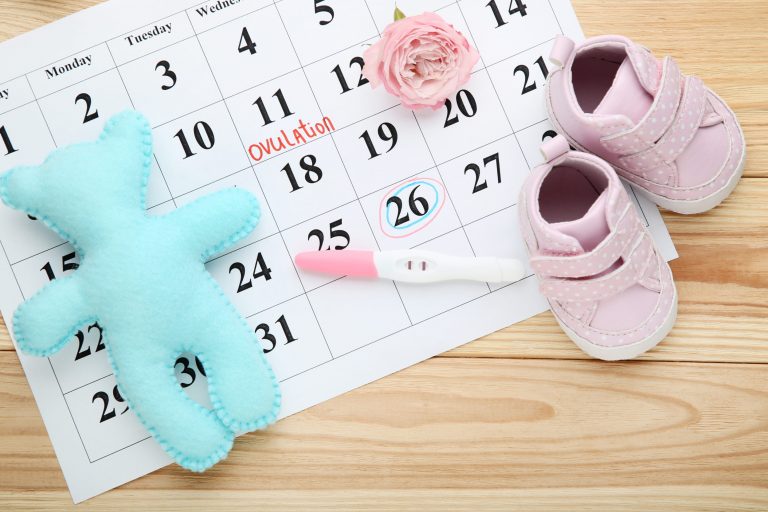
- Or wait about 10 to 14 days after ovulation
- Testing too early can result in a false negative
If you are ready to test, we offer fast and free shipping on pregnancy testing options.
Recommended products
-
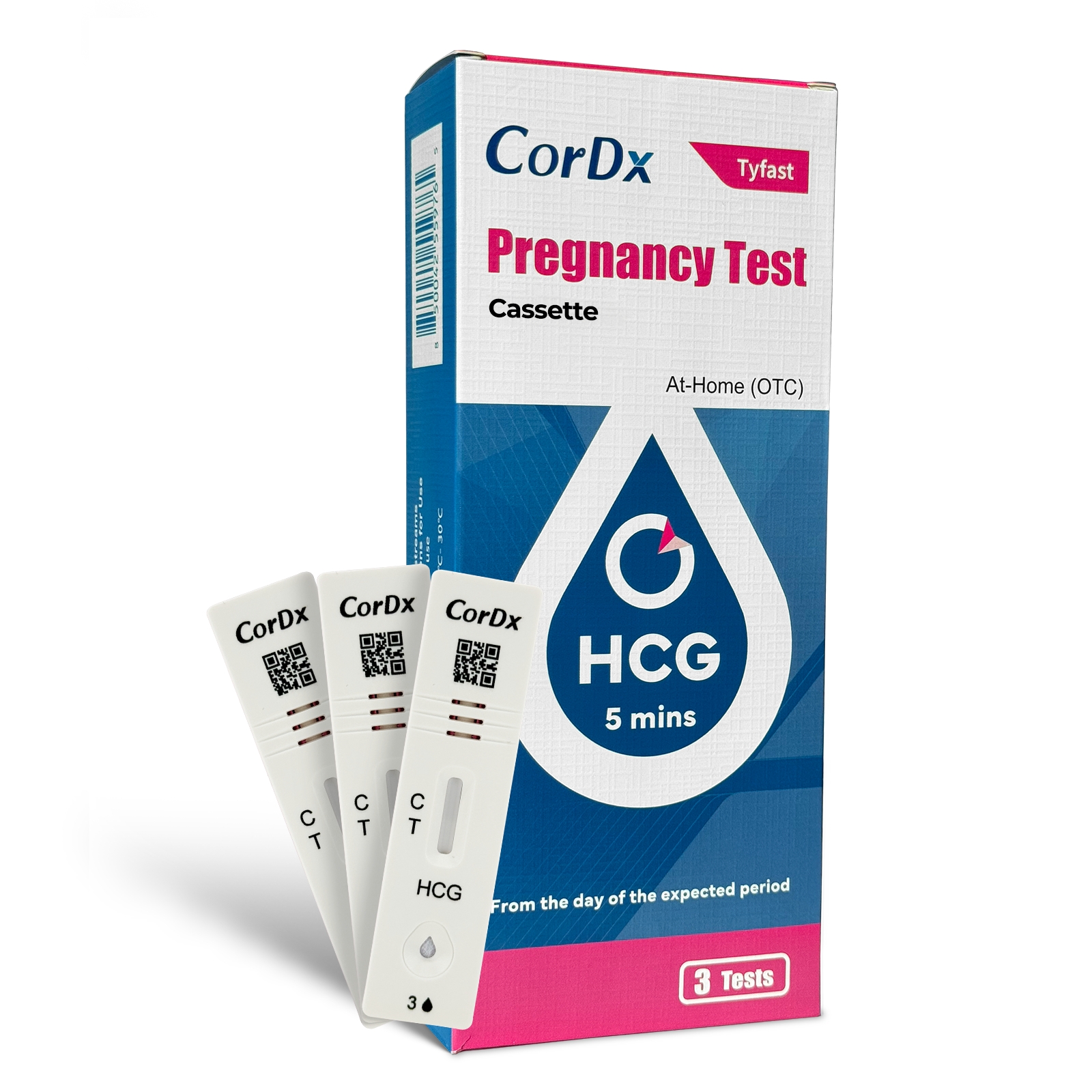
CorDx One Step hCG Pregnancy Test Cassette 3 Pack
Original price was: $11.99.$7.00Current price is: $7.00. -
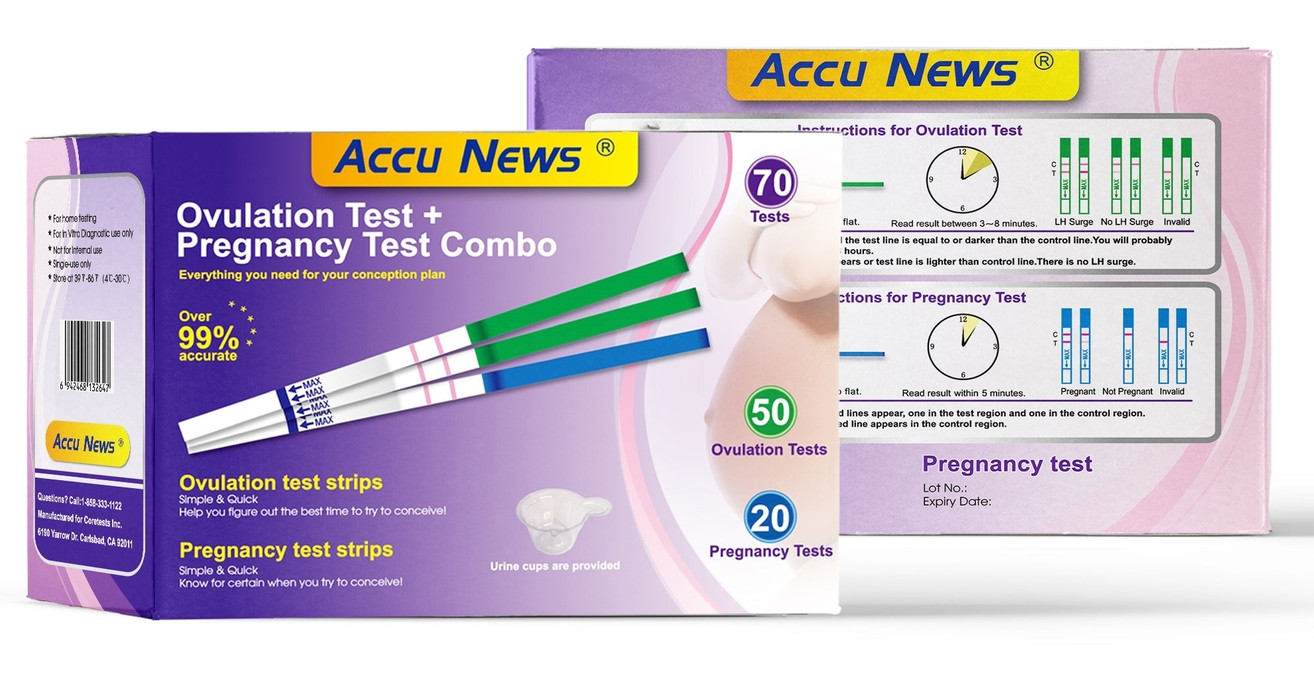
Accu News Ovulation (LH)+ Pregnancy (hCG) Combo Tests
Original price was: $21.99.$15.00Current price is: $15.00.
How soon do pregnancy symptoms start?
Pregnancy symptoms usually begin after implantation, which typically occurs 6 to 12 days after ovulation. Most women report noticing symptoms around week 4 of their cycle, though some may feel subtle changes earlier.
Can you feel pregnancy symptoms at 2 weeks?
No, most women do not experience pregnancy symptoms at 2 weeks. At this stage, ovulation is just occurring and you are not technically pregnant yet. Symptoms typically begin after implantation in week 3 or later.
What are the earliest signs of pregnancy before a missed period?
Some women report early signs such as fatigue, breast tenderness, mild cramping, or light spotting before a missed period. These symptoms are caused by early hormonal changes after implantation but can be easy to miss or confuse with PMS.
What does implantation feel like?
Implantation may cause mild cramping and light spotting, often described as less intense than a period. Many women report no noticeable symptoms at all, which is also completely normal.
Why do pregnancy symptoms feel like PMS?
Pregnancy symptoms and PMS feel similar because both are driven by hormonal changes, especially progesterone. The difference is that pregnancy symptoms tend to continue or increase, while PMS symptoms usually go away once your period starts.
Can you have pregnancy symptoms but a negative test?
Yes, this can happen if you test too early. Pregnancy tests detect hCG, which only rises after implantation. If implantation occurred later than expected, hormone levels may not yet be high enough to show a positive result.
What symptoms are not reliable signs of pregnancy?
Symptoms like bloating, cramping, mood swings, and headaches are not reliable indicators of pregnancy because they commonly occur with PMS. A pregnancy test is the only way to confirm pregnancy.
Sources
This content is based on established medical guidance and commonly reported early pregnancy symptoms. For more detailed information, refer to the following trusted sources: